Contextual ways to follow-up on content within an AI Mode response.
3 months
April 2025
Role: UX Lead
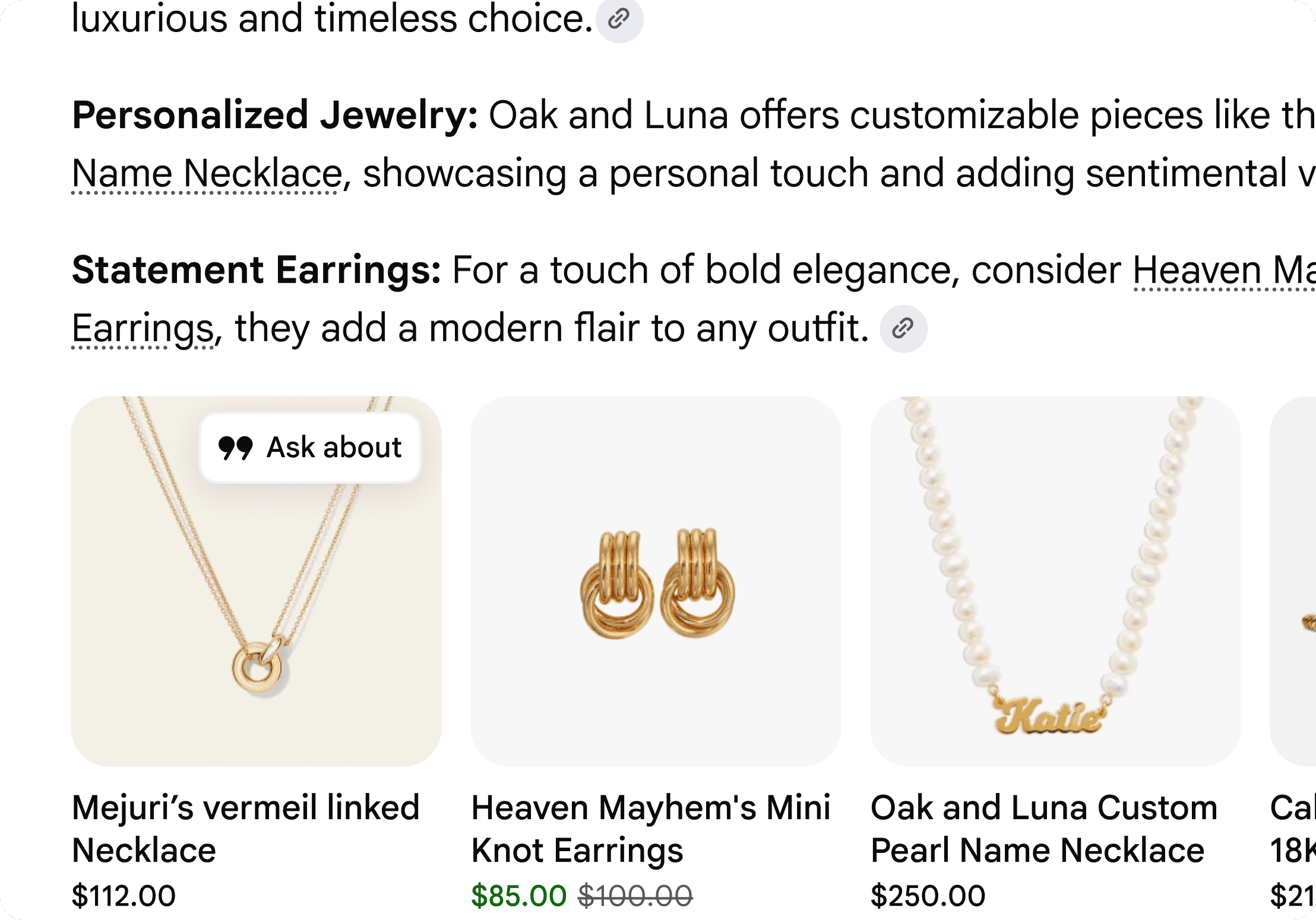
Inefficient questioning — Typing out a full follow-up and referencing a particular part of the content is cumbersome and inefficient, specifically when referencing text or entities.
CHALLENGE
Design principles
Evolving the
Experiment Hub.
To address the challenges of a rapidly expanding platform, the Search Labs redesign focused on creating a more scalable, discoverable, and user-friendly experience. This meant tackling the core issues head-on:

SEARCH LABS HOME (NEW)

SEARCH LABS FEED (NEW)
Improved visual hierarchy and distinct sections for different types of experiments, improving information architecture.
Guides users with a hero carousel and clear visual hierarchy to highlight key experiments.
Sparking Curiosity and Encouraging Exploration.
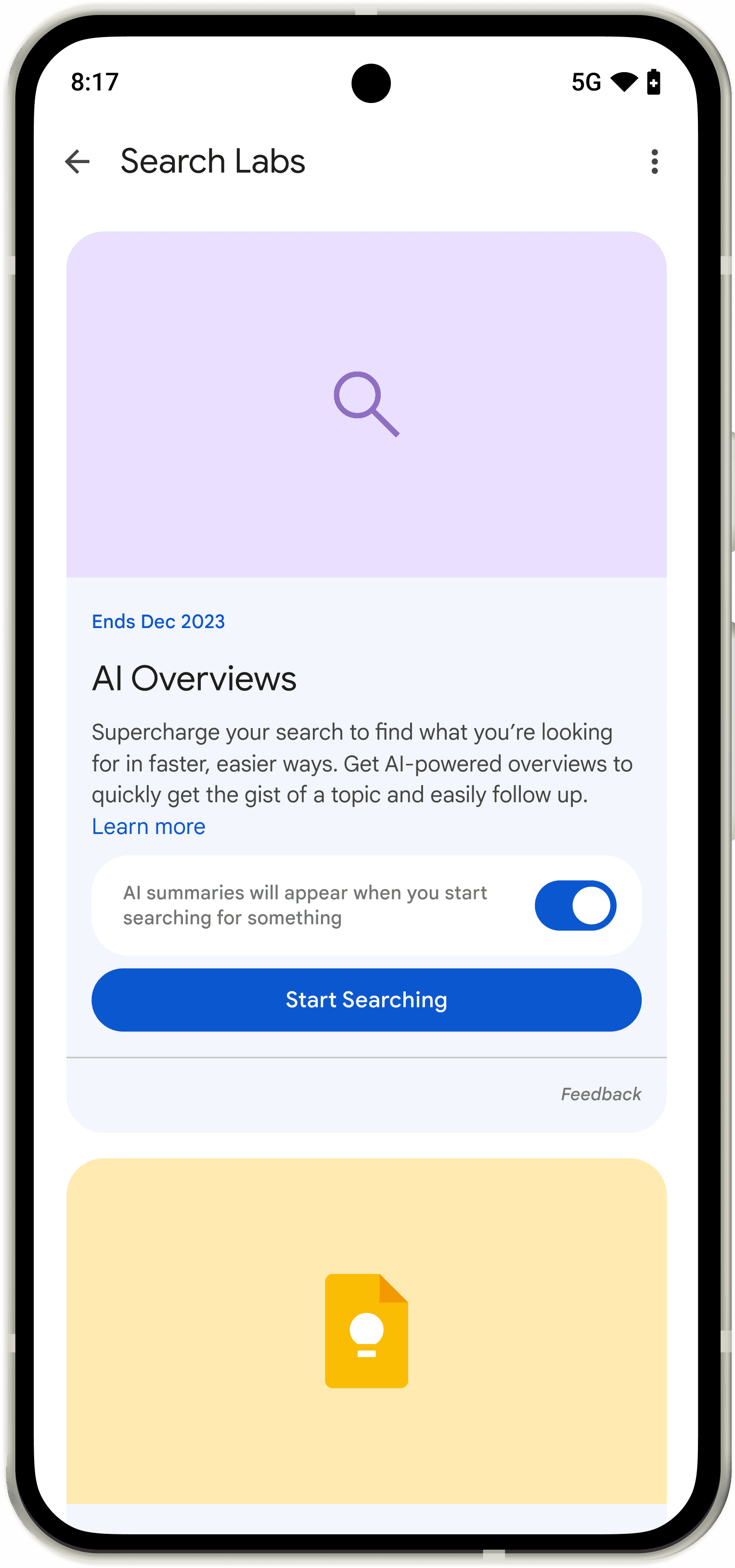
The redesigned experiment cards in Search Labs aim to capture user interest and invite them to discover the potential of experimental search features.

EXPERIMENT CARDS (NEW)
Driving discovery with eye-catching visuals and concise descriptions that invite users to explore new search possibilities.
Promotes understanding with clear explanations and interactive examples that help users grasp the value and functionality of each experiment.
Encourage engagement with prominent "Try" buttons and a "Feedback" option that facilitates active participation and experimentation.

MANAGE EXPERIMENTS PAGE (NEW)
Provides centralized control by consolidating experiment management into a single, dedicated page, simplifying navigation.
Creates organizational clarity with a clear visual hierarchy, familiar icons, and concise descriptions for easy identification of experiments.
Offers granular control with clear on/off toggles and a consistent "Feedback" option, empowering users to personalize their search experience.

EXPERIMENTAL DETAILS PAGE (NEW)
Reduced information overload by moving detailed explanations and advanced options to a separate page, preventing the main interface from becoming cluttered and overwhelming for users who prefer a simpler overview.
Facilitates informed decision-making by offering users comprehensive information and visualizations to help them fully understand the implications of activating an experiment before they commit to it.
LOOKING AHEAD
What's next?
MEASURING SUCCESS
The "What if(s)?"
While the final product went in a different direction, I still think the alternative designs had a lot of potential. There are some really good ideas here that, with a bit more exploration, could have made the launched experience even better.

ALTERNATIVE DESIGNS
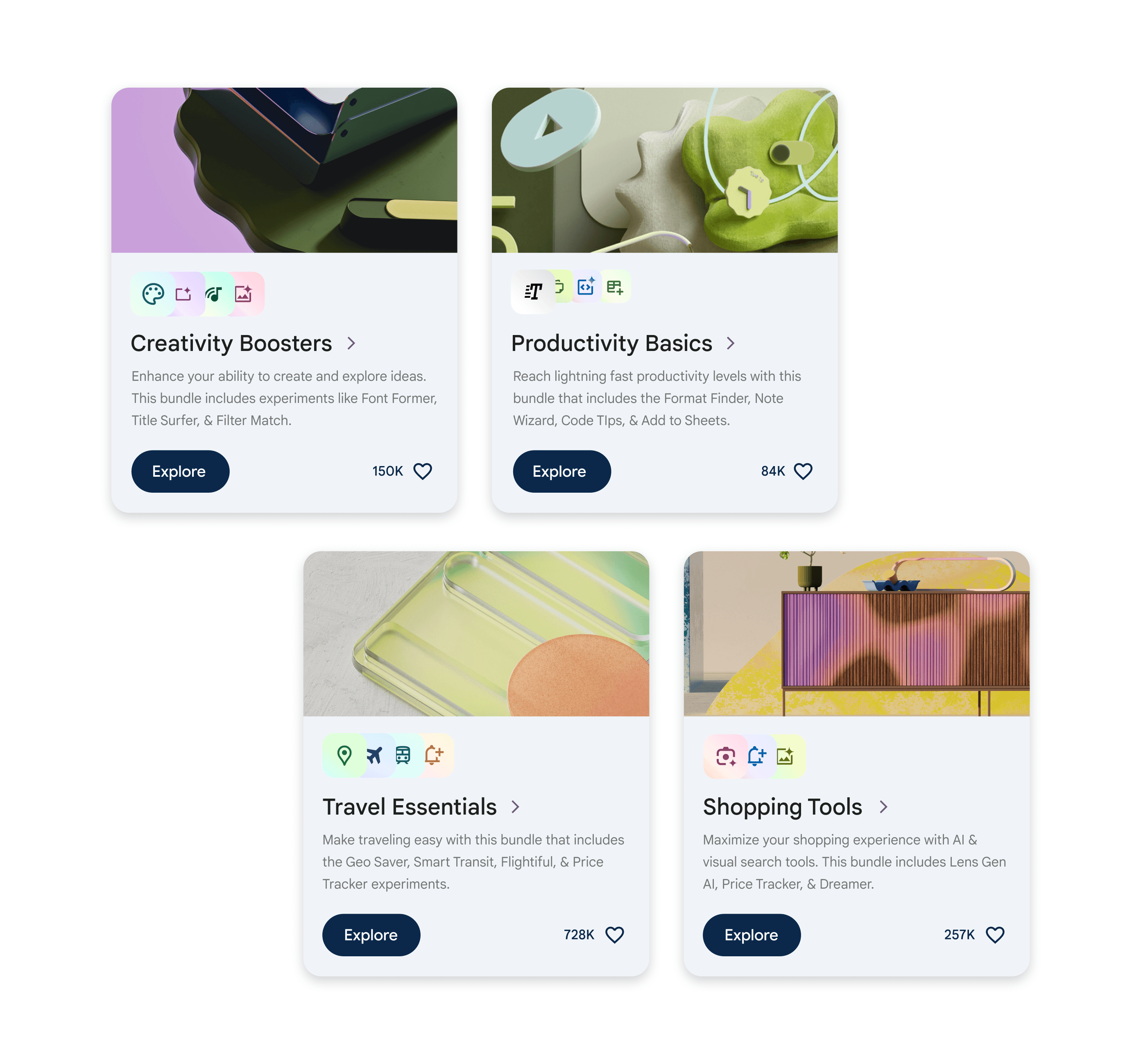
ALTERNATIVE EXPERIMENTAL CARDS, BUNDLED
Project takeaways.
Talking to People — My initial ideas for this came from my own experiences and chats with friends and coworkers. But to really get a good grasp of how people like to use Search, I want to do more user research and talk to actual users.
Fleshing it out — This project was a bit like fixing up an old car – we had to work with some rusty parts and outdated blueprints! There's definitely room to give it a fresh coat of paint and some modern upgrades, which in turn would make the whole experience smoother.
Seamless Integration — Exploring ways to weave experimental features directly into the search experience, could create a more intuitive and unified user journey.
